
Mapping Confession: What If Your City's Map Could Be a Prayer?
What if the map of your city could be read as a confessional prayer?
More than a tidy grid of streets and property lines, a map holds a record of what has been built and buried, connected and divided, remembered and erased.
What if we learned to read those lines differently?
What if a map could help us name where a place has failed its people, ask God for mercy, and begin to imagine repair?
That is the question at the heart of Mapping Confession / Placing Repentance, a collaborative art installation created by theologian and artist Jennifer Allen Craft, one of our Parish Collective Residents in Place, rooted in LaGrange, Georgia.
Confession rooted in the ground
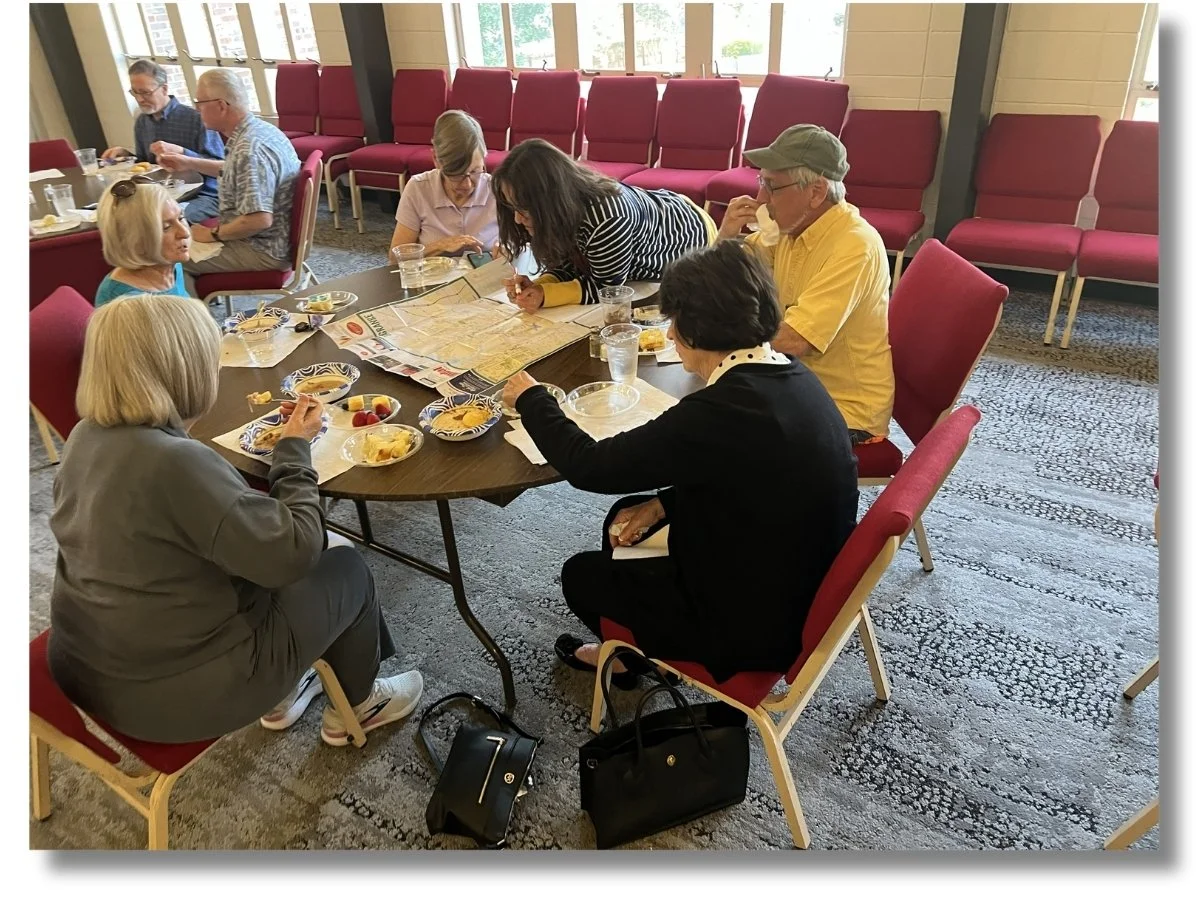
Over the season of Lent and into the summer of 2025, Jenn led her congregation at St. Mark’s Episcopal Church through a practice she calls “confessional mapmaking.”
It begins with a simple premise: sin is not only personal. It can become embedded in the landscape itself.
We see it in housing insecurity, redlined neighborhoods, severed transit lines, damaged watersheds, and in who has access to land, resources, and opportunity, and who does not. We see it in the histories our places celebrate and the ones they would rather forget.
And because the church lives within its place, it shares in those “sins of place,” what Christians have long described as “the things we have done and left undone.”
So the congregation set out to confess them, not only with words but also with their hands.
A prayer with addresses
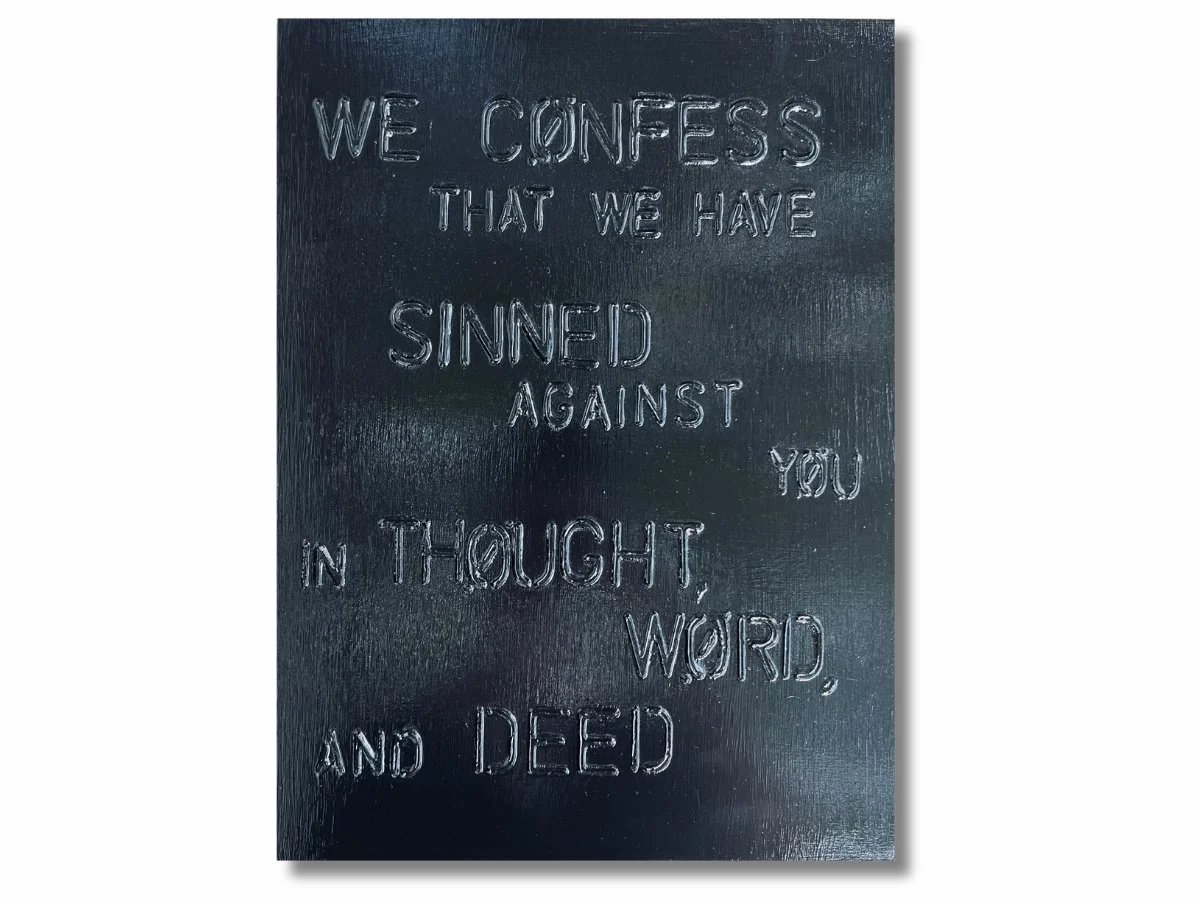
Together, Jenn and the congregation created a twelve-panel work whose titles, read in order, form a modified version of the General Confession.
The installation opens in near-total black. Beneath layers of paint, the words “We confess that we have sinned against you in thought, word, and deed” are barely legible.
It is a picture of how the prayers we know by heart can become so familiar that we stop seeing them.
From there, the panels move outward into the particular landscape of LaGrange.
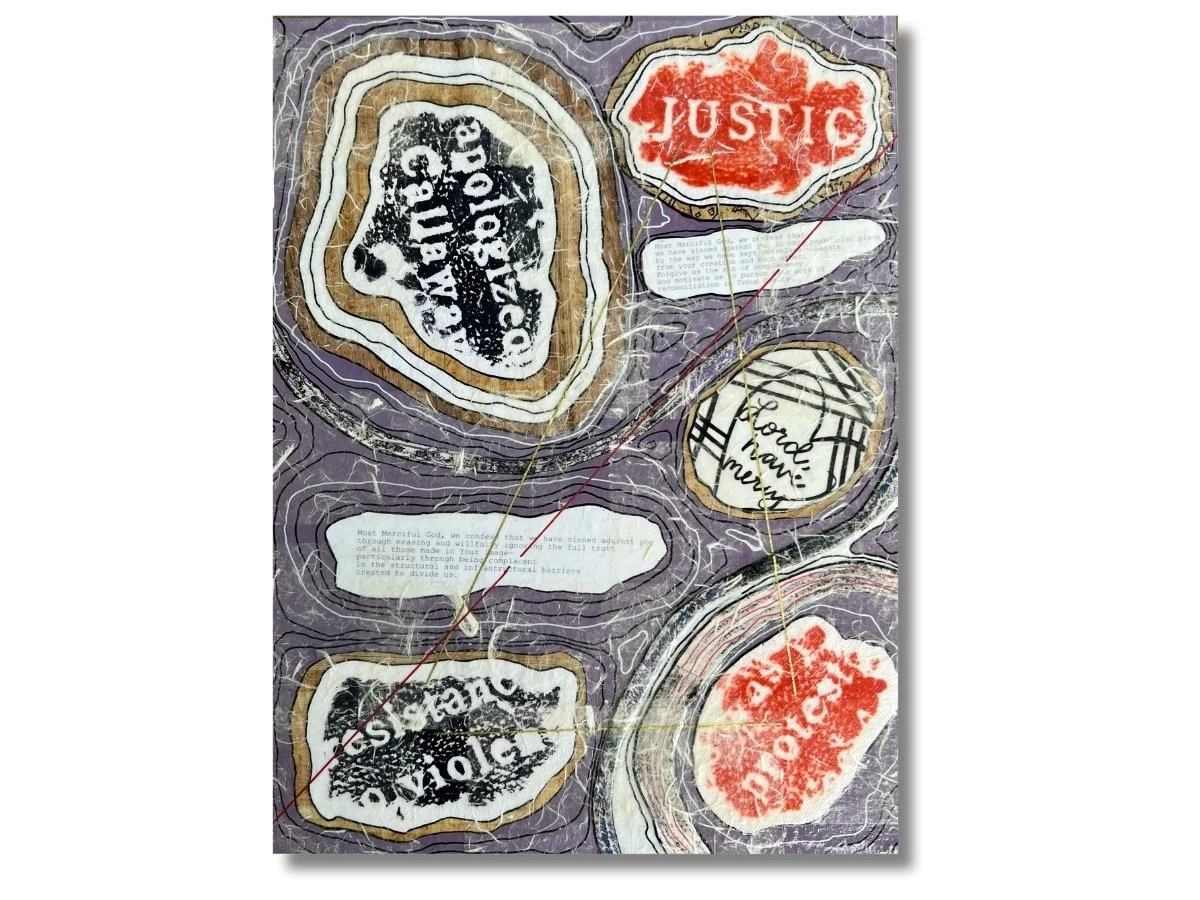
One panel holds the city’s confession of the 1940 lynching of Austin Callaway, drawing on the public acknowledgment made by the community itself.
Another layer of soil gathered from actual sites of harm, including an Indigenous village razed by settlers in 1793 and a cemetery where more than a thousand unmarked, mostly African American bodies were found beneath the ground.
A poverty map traces how wealth and poverty still fall along intentionally drawn historic lines.
Panel by panel, the work insists that these are not abstractions.
They are placed. They have addresses.
And so does the possibility of repentance.
When the Prayer Turns
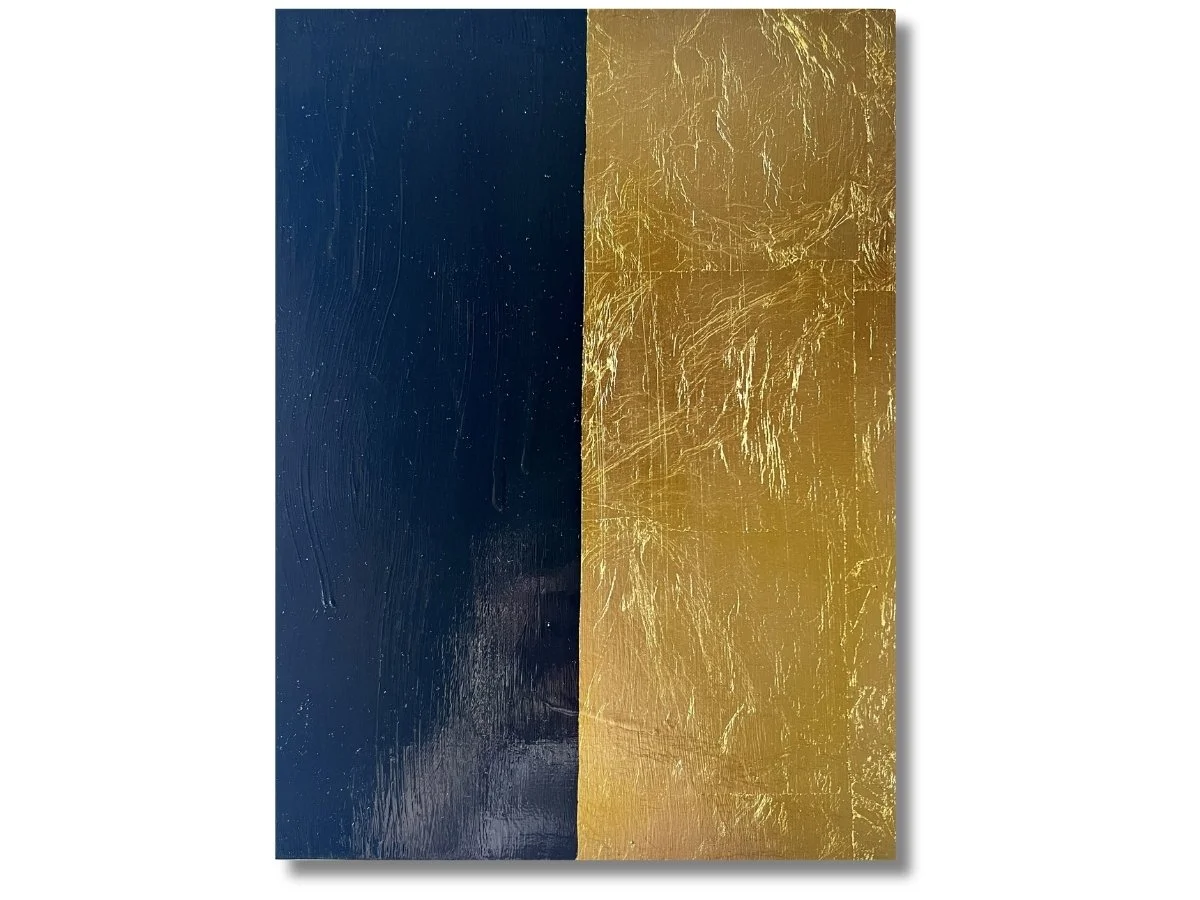
Midway through the installation, something changes.
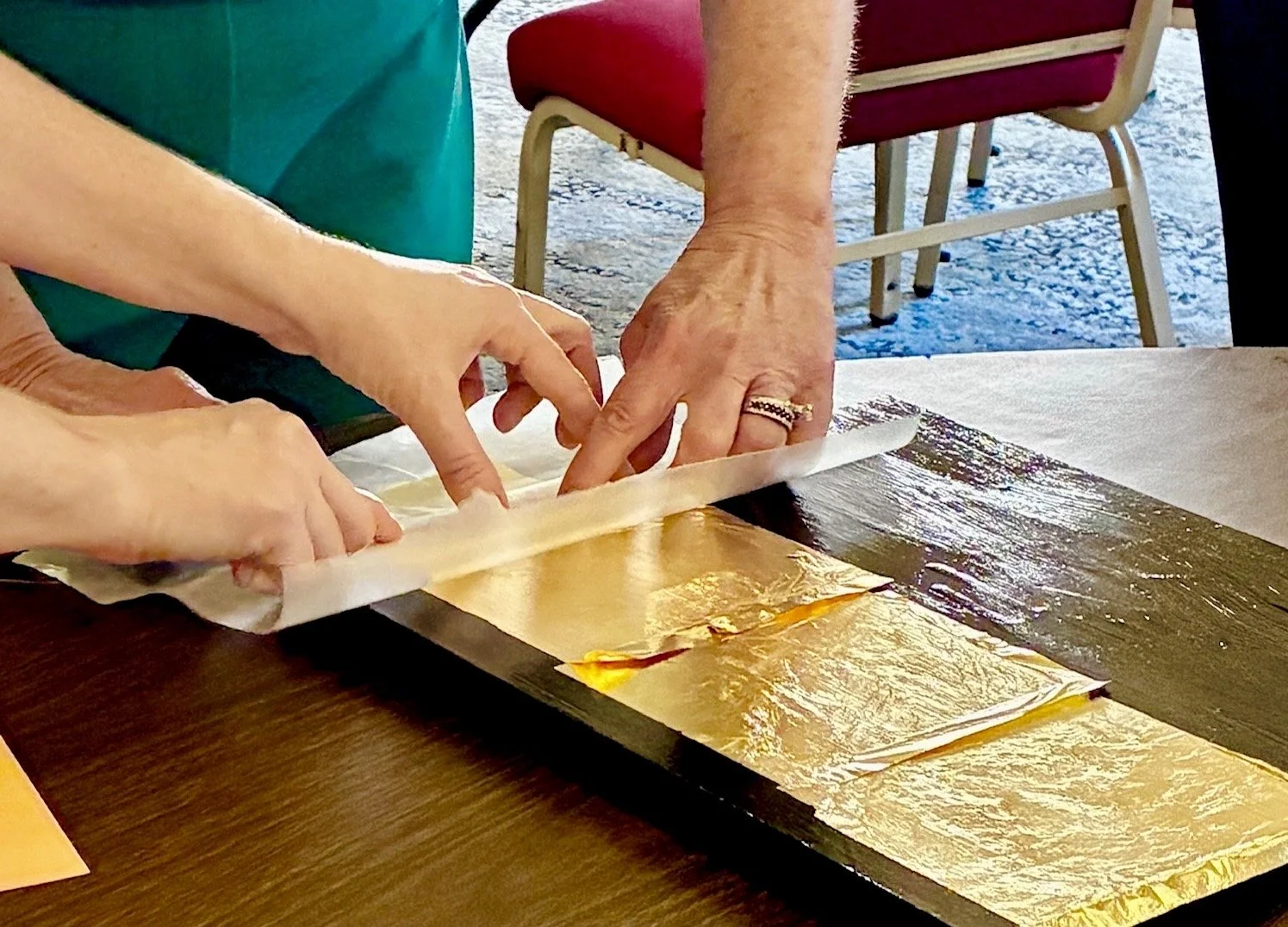
A single panel splits down the middle. Half is painted with the congregation’s written repentances. The other half is covered in gold leaf.
It marks the ancient turn from confession toward hope.
Confession, in this work, is not an ending. It is a way of telling the truth so that something new might become possible.
Making Wounds Visible, and New
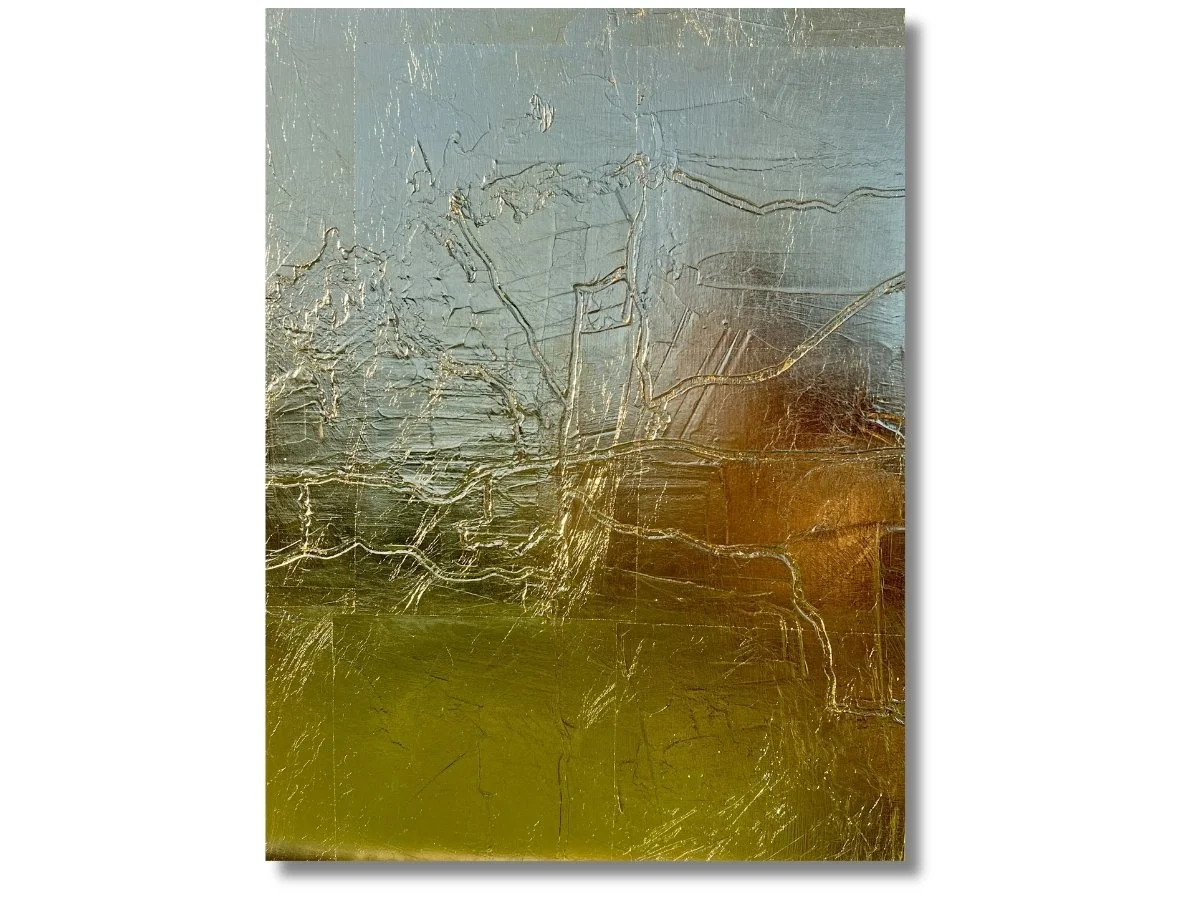
The final panels gild the wounded map of LaGrange in gold.
Its divisions remain visible, but they are transfigured.
Jenn’s work points toward the way Christ bears the wounds of his suffering even in resurrection. The scars remain. History is not denied.
The damage isn’t erased. It’s made new.
This is perhaps what makes Mapping Confession / Placing Repentance more than an art installation. It becomes a practice and a way of learning to see.
What happens when we look at our own neighborhoods with enough honesty to notice the lines that have shaped who belongs, who has been displaced, who has been forgotten, and who has been left without access to what they need to flourish?
What happens when we allow those discoveries to become prayer?
And what happens when prayer moves us toward repair?
What If We Learned to Map Our Places Differently?
Mapping Confession / Placing Repentance was created by Jennifer Allen Craft with the congregation of St. Mark’s Episcopal Church in LaGrange, Georgia, and funded by the Calvin Institute for Christian Worship.
The installation was shown at the LaGrange Art Museum in 2026. But perhaps its most lasting home is in the practice it models for the rest of us.
Every neighborhood carries a story.
Every map contains choices.
Every place holds both wounds and possibilities.
Perhaps our work as neighbors and as the church is to learn how to see them.
To name what has been done and left undone.
To confess what is true.
To ask where repair might begin.
And then, together, to imagine what it might look like for the places we call home to be made new.
Reflection
It's easy to think of sin as something that lives only in the heart where its something private, individual, ours alone to confess. Jenn's work asks a harder question: what if it's also written into the streets we drive, the lines that divide our neighborhoods, the histories our places carry whether we acknowledge them or not?
Confession, here, is a way of paying attention, of seeing what's been there all along and refusing to look away. It helps us tell the truth about our places because we believe those places are still capable of renewal.
What histories is your own neighborhood carrying, both the celebrated ones, and the buried ones?
Where are old wounds still visible in streets, property lines, schools, housing, waterways, or public spaces?
Where might honest confession be the first step toward repair, rather than a reason for despair?
The point isn't guilt. It's the hope Jenn's final panel holds out: that our places, wounds and all, can be made new.
Next Step
➤ Learn the fuller story of where you live. Look into how your neighborhood was mapped, zoned, or divided. Who was included and who was left out in the making of it?
➤ Notice one "sin of place" near you. A severed neighborhood, a neglected corner, a history gone unnamed — and ask what faithful repair might begin to look like.
➤ Do it together. Like St. Mark's, gather a few others; confession and repair are the work of a community, not a solo project. Invite a few neighbors, friends, or members of your congregation to learn the story of your place together.
Maybe even pull out a map.
Look closely.
What might your place be asking you to see?
And what might change if that map became a prayer?
