
Back to School and Back to the Neighborhood
By Emma Rooker and Juli Kalbaugh
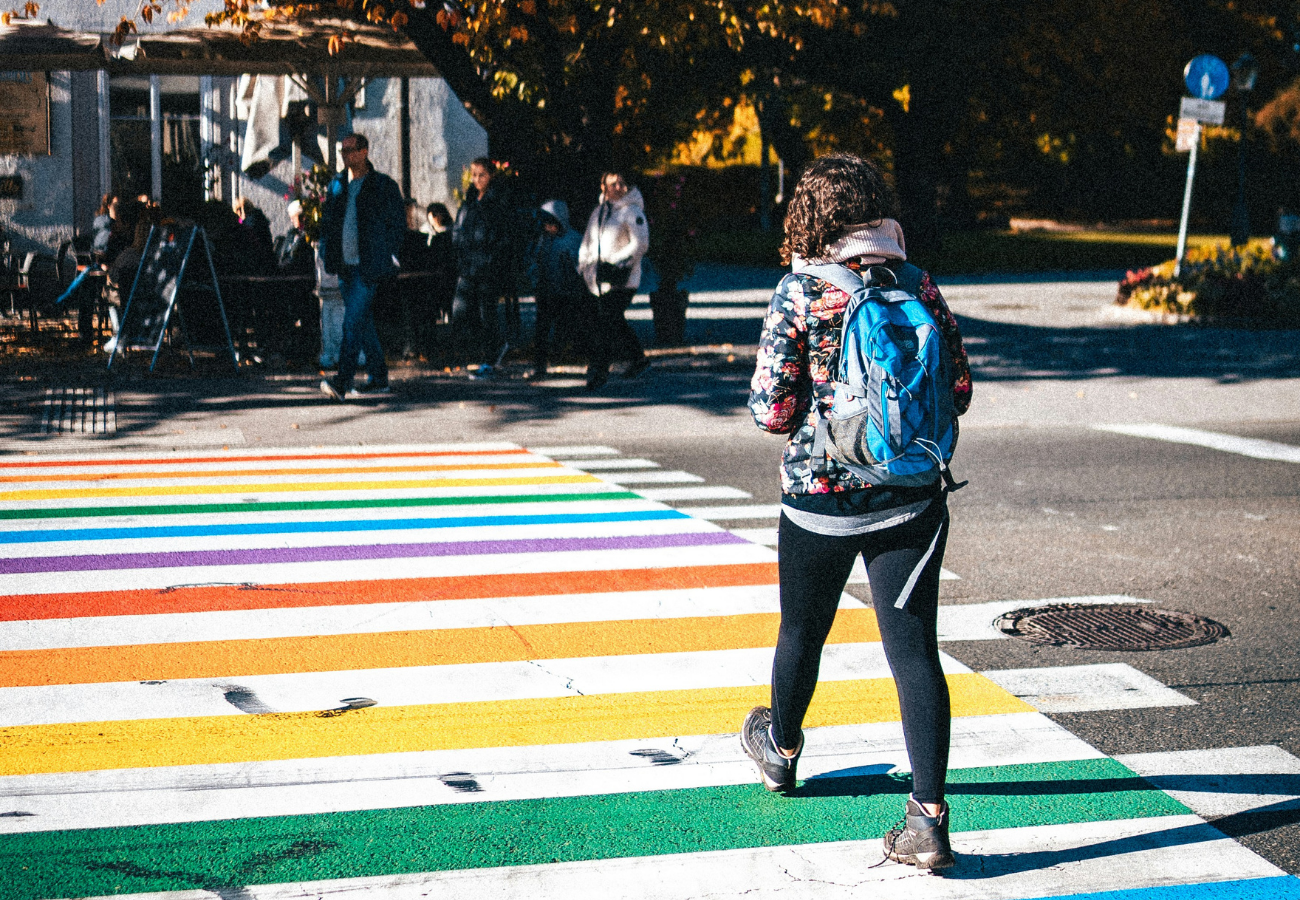
The beginning of a school year often changes the rhythm of a neighborhood.
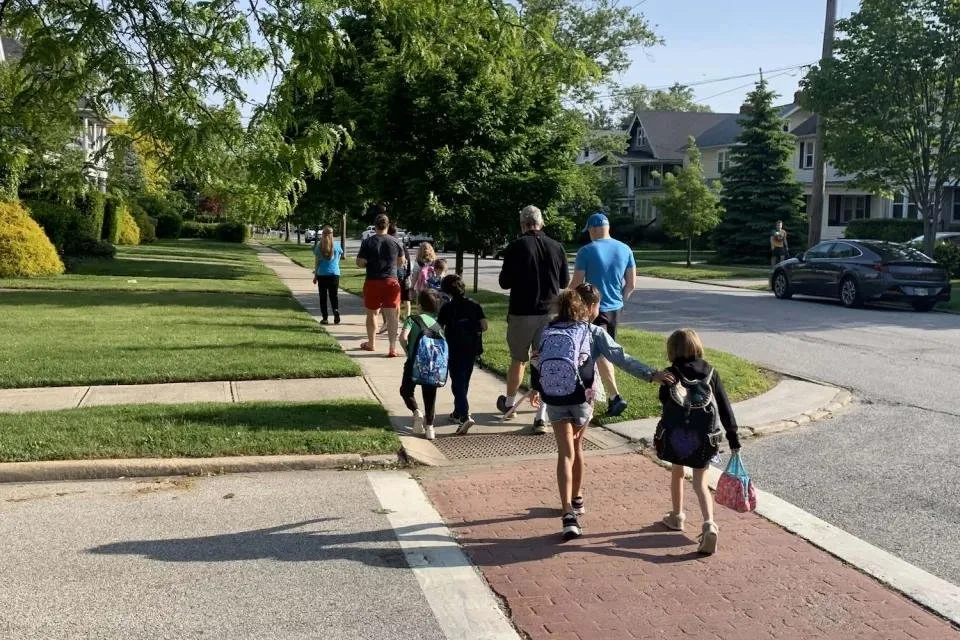
The sidewalks fill up again in the morning, school buses begin their ritual routes yet again, and kids walk down the street with backpacks bouncing against their shoulders. Crossing guards return to their corners. Soccer fields and playgrounds fill up. Parents, grandparents, siblings, neighbors, coaches, volunteers, and school staff all begin moving to a slight different rhythm.
You don’t have to have a child in school to notice it.
Schools are some of the most significant gathering places in our communities. They bring together families who might otherwise have very little reason to meet. They connect us with teachers, administrators, coaches, custodians, bus drivers, counselors, and other care-givers. They create rhythms of gathering that happen week after week, year after year.
Many of us focus on the lives of the children, but what if the beginning of a school year could also be an invitation for all of us to pay closer attention to this web of relationships?
What if going back to school could also mean going deeper into our neighborhoods?
We can begin by paying attention
We think neighboring begins with noticing.
Before asking, "How can I get involved?" we might begin by asking, "What is happening here?"
What school serves the neighborhood where I live? Who are the people who make this school work? What are the rhythms of the school year? What events bring people together? Where do people naturally gather? What challenges are teachers, staff, and families facing? Who seems to have a hard time finding their place?
We don't have to arrive with a plan to fix anything. We can simply become curious about the place that carries so much relationship and time.
If you’re a parent or care-giver, that might mean introducing yourself to a teacher at back-to-school night instead of simply finding your child's desk. It might mean learning the name of the crossing guard you see every morning. It might mean talking to another parent at pickup instead of immediately getting into the car.
If you don't have children in school, there are still plenty of things to notice. Maybe you walk past the same school every day. Maybe Friday night football is where half the neighborhood turns up. Maybe your local coffee shop is full of teachers at 7 a.m. Maybe you've never looked at the sign outside the school to see what's happening there.
These things can feel small.
But neighboring is often built out of small things.
The more we pay attention, the more we begin to see that a school isn't an isolated institution sitting somewhere in our neighborhood.
It's part of the neighborhood.
Look for ways to contribute
Once we begin paying attention, we can begin asking a different question:
What can I contribute to this place?
Maybe the school needs volunteers for an event. Maybe a teacher could use help organizing materials. Maybe the PTA or PTO needs another person at a meeting. Maybe there is a school garden that needs tending, a sporting event that needs volunteers, or a community night that needs extra hands.
Maybe your church or organization has space, people, or resources the school could actually use.
Maybe you're a retired teacher, an artist, a gardener, a musician, a business owner, or simply someone with a couple of hours to give.
But contributing doesn't have to mean adding another major commitment to an already-full calendar.
Sometimes it looks like bringing coffee for teachers, or showing up to a school performance.
Sometimes it means donating supplies when a teacher asks.
Sometimes it means sitting next to a parent you don't know at a school event and starting a conversation.
And sometimes it means asking a teacher, "Is there anything you wish more parents knew?"
For all of us, it might be as simple as asking:
“What would it look like for me to be a good neighbor to this school?”
The goal isn't to become the most involved person at the school, but to become people who see the school as part of the community we share.
Make room for the family you don't know yet
Every school has families who are deeply connected and families who aren't.
Research on family engagement consistently points to the importance of relationships between families, educators, and communities. Parent involvement isn't only about helping your own child succeed. It can also strengthen the broader relationships and networks that make a school community healthier.
There are parents who have been at the school for years and know everyone. There are families arriving for the first time. There are parents navigating a new language or a new city. There are families working multiple jobs. There are grandparents raising grandchildren. There are parents who desperately want to be involved but don't have the time, transportation, flexibility, or confidence to participate in the ways schools often expect.
And there are plenty of people beyond the school walls who could be part of that web of care, too.
Neighboring invites us to widen our vision.
Who isn't being heard?
Which families might need extra support?
How can we help create a school where more children feel known and welcomed?
Research has found that school-wide parent involvement and parent-to-parent networks can contribute to healthier learning environments, suggesting that the benefits of family engagement can extend beyond an individual child. Imagine if that care extended beyond the parents?
This is one of the beautiful things about neighboring. We begin with the people closest to us, but our concern slowly expands.
Let your school introduce you to your neighborhood
Schools can also become doorways into places and people we might not otherwise encounter.
A soccer game might introduce you to families from another part of the neighborhood. A school fundraiser might send you into a local restaurant you've never visited. A community night might introduce you to an organization doing good work three blocks from your house. A conversation with a teacher might help you see something happening in your neighborhood that you've completely missed.
Follow those threads.
Instead of seeing each encounter as an isolated event, we can begin to see the web of relationships underneath it all.
This is what makes a neighborhood a neighborhood.
Not simply houses next to one another, but people becoming familiar with one another. People noticing what is happening around them. People showing up. People learning to care about places that belong to all of us.
Schools are already doing some of this work for us. They're gathering people who might otherwise never meet.
We can let our schools become a place where we learn to love our neighborhood a little more deeply.
Because going back to school doesn't just mean our kids are returning to their classrooms.
It can mean we are returning to our communities, too.
Reflection
Almost nothing we're suggesting here requires starting a program or taking on a major commitment.
It's five minutes of conversation. It's showing up somewhere you normally wouldn't. It's learning a name you didn't know last week.
Small enough that it can feel like it doesn't count, which is exactly why it's easy to skip, one school year into the next, until the kids are grown and the neighborhood is still full of people we recognize but have never met.
But small is the way neighboring begins.
Who is part of your neighborhood's school community that you've seen but never met?
What might you discover if you learned their name?
Next Step
➤ Learn one name this week. The crossing guard, the front office secretary, the parent who's always early, the neighbor you see out for a walk each morning.
➤ Ask one question. "What's something you wish more people in the neighborhood knew about this school?"
➤ Notice who's missing. Who isn't represented or able to participate, and what might be getting in the way?
A Prayer for the School Year
God of this place,
As another school year begins,
help us pay attention.
Bless the children walking familiar sidewalks
and the ones finding their way for the first time.
Bless the teachers preparing classrooms,
the bus drivers learning their routes,
the crossing guards standing at corners,
the counselors listening,
the coaches encouraging,
the custodians caring for shared spaces,
the office staff answering one more question,
and all the people whose work holds a school together.
Bless the parents and caregivers carrying lunches, calendars, hopes, worries, and more than anyone else can see.
And bless those of us who don't have children in these schools,
but share the same sidewalks, parks, libraries, businesses, and streets.
Remind us that these schools are part of our places, too.
Make us curious about the people we don't yet know.
Help us notice who is carrying too much.
Show us where there is joy to celebrate,
where there is hurt to tend,
and where one small act of neighboring might matter.
May our schools be places where children are known,
families are welcomed,
teachers are supported,
and neighbors learn one another's names.
And as buses roll and bells ring and another year gets underway,
teach all of us to love the places we share
and the people who call them home.
Amen.
