
Becoming What We Behold: Art, Unease, and the Posture of Advent
A Coffee Break Conversation with Scott Erickson
In seasons of transition, many of us navigate a quiet unease, which is the kind of feeling that bubbles up when old ways of being no longer fit but the new path hasn’t fully taken shape. It is easy to misinterpret this discomfort as a sign that we are failing or drifting. But what if that internal disruption is actually the evidence of new spiritual life trying to break through?
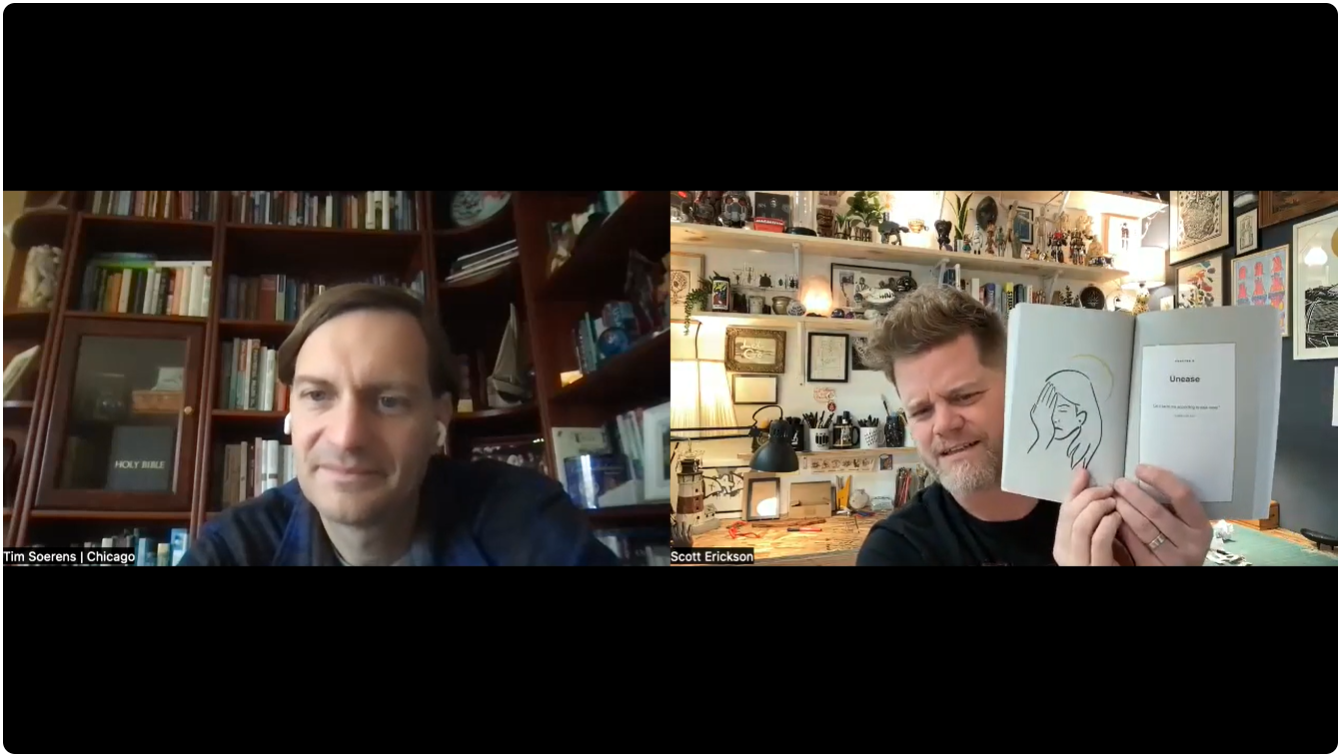
In this holiday edition of the Coffee Break conversation, Tim Soerens sits down with Scott Erickson (known to many as Scott the Painter), who is an artist, spiritual director, and the creative force behind Honest Advent and the one-man show Say Yes. Together, they unpack the deep tension of the incarnation, the necessity of updating our visual vocabulary of faith, and how to practice waiting in the dark with open eyes.
What You’ll Hear in This Conversation
Unease as the Pathway to Holy Growth: Scott shares a profound meditation from Honest Advent linking spiritual transition to the physical cost of embodiment. Just as morning sickness is the uncomfortable first evidence of new life, our internal, dry-heaving moments of anxiety, career risk, or relational vulnerability are often signs that something sacred is being formed inside us. Growth never comes through ease because it requires stretching.
The Liturgical Danger of "Forced" Feelings: While the church calendar provides beautiful scaffolding for our days, Scott challenges the false dichotomy that we must manufacture specific emotions just because a calendar page turned. Advent isn’t about forcing yourself to feel expectant; it is an invitation to bring your actual, messy, real-world questions into the quiet.
The Practice of Waiting in the Dark: Noting that the winter solstice marks the darkest time of the year in the Northern Hemisphere, Scott offers a simple, street-level practice: get up slightly earlier than usual and simply sit in the literal darkness without an agenda. This posture of anticipation forces us to look beneath the noise of a broken world to find the hope hidden in unknown spaces.
Reclaiming a Mature Visual Vocabulary: Most adults were handed childish Sunday school cartoons of God, complete with color-coordinated robes, and were never offered a new visual paradigm after middle school. Scott discusses his life’s work as creating "excavation tools" rather than simple biblical illustrations. He aims to replace outdated, platonic concepts of a distant, Zeus-like God with symbols that capture a complex, intermeshed, and deeply incarnate divine presence.
Developing "Night Vision" for Hope: Reflecting on the Via Lucis (Stations of the Resurrection), Scott shares an image of Mary Magdalene as the first resurrection preacher. Pulling from a concept by pastor Nadia Boltz-Weber, Scott highlights that Mary was chosen because she possessed "night vision goggles," meaning she had the rare ability to spot hope in deeply dark places.
Watch the Preview Below 👇
Take the Next Step
This isn’t just a conversation to consume. It’s an active invitation to look at what is capturing your daily attention.
Take a moment to look around your immediate environment this week. What images, symbols, or narratives are you consistently gazing at, and what kind of person is that visual diet shaping you to become? Can you find the courage to sit in your current unease, trusting that life is being formed in the dark?
Leave us a comment below and let us know your thoughts!
