
Taste the Table
by Emma Rooker
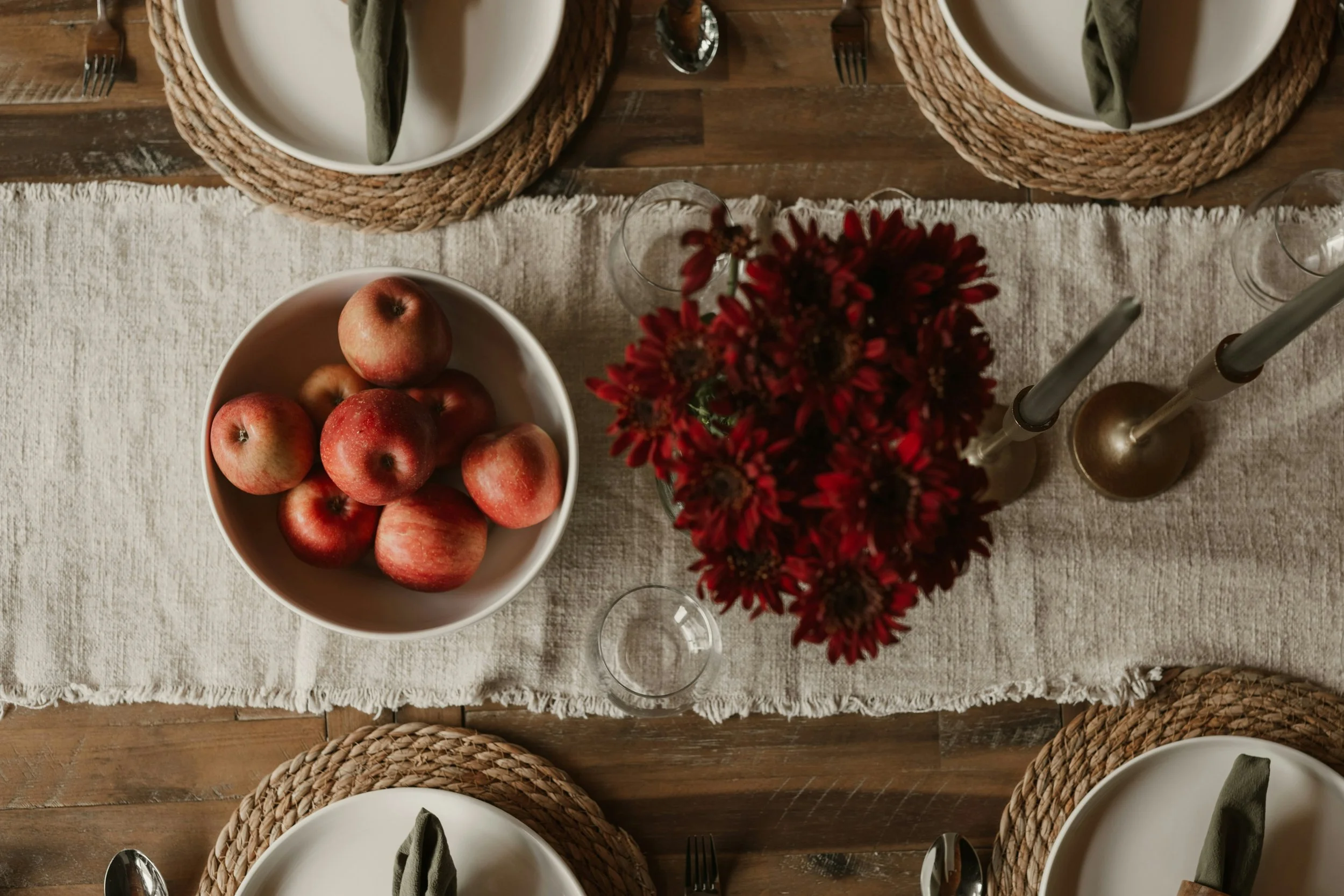
In our neighborhoods, in varying stages, the signs of autumn are beginning to reveal themselves.
The evenings will gradually begin to arrive a little earlier, and the air carries a new kind of crispness. Gardens begin to relinquish the last of what they’ve been quietly nurturing all summer, and local farmers markets fill with the colors of the harvest. Some change is subtle, and some is not at all, and the rhythm of our neighborhoods begins to shift. Porch gatherings give way to kitchens. Long afternoons outside become evenings around tables. We begin to gather in.
Fall is a season of harvest, and holds the possibility of being a season of gathering.
There is something about this time of year that reminds us that what we grow is not meant to be kept for ourselves. A garden reaches its purpose not simply when something grows, but when its fruit is gathered, shared, prepared, and enjoyed together.
This autumn, we are reflecting on a simple invitation:
Taste the table.
The table is one of the most common, understated, ordinary places in our lives. It is where we eat, but it can also be where we linger. It is where stories are exchanged, where questions emerge, where differences become visible, where celebrations happen, and where we sometimes find ourselves surprised by people we might never have otherwise known.
A table does more than hold food. It creates a place for people.
And perhaps this is part of what it means to love our neighborhoods well.
If summer invited us to plant our feet, fall beckons us to pull up another chair.
Setting a table in our neighborhood is a simple but meaningful act of hospitality. It is choosing to make space for people who might otherwise remain strangers. It is noticing who is missing and wondering what it would take to make room. It is bringing what we have, receiving what others bring, and trusting that something meaningful can happen when we share a meal.
Scripture is full of tables.
Jesus eats with friends and strangers, with people who are welcomed and people who are overlooked. He tells stories about banquets and invitations. He feeds hungry crowds. He breaks bread with his disciples. Again and again, meals become places where boundaries are crossed, relationships are formed, and the abundance of God becomes tangible.
The table becomes a picture of the Kingdom of God: not simply something we believe in, but something we can begin to experience together.
What might it look like for our neighborhoods to become places where more tables are set?
Perhaps it is a regular dinner with neighbors. A potluck in the backyard. A meal at a community center. Coffee with someone you have passed a hundred times but never really met. Inviting a neighbor who lives alone. Bringing a dish to someone who is going through a difficult season. Sitting down at a table you did not set yourself and allowing someone else to welcome you.
And perhaps the invitation is not simply to become better hosts.
It is also to become better guests.
Neighborhood life asks something of us beyond what we can provide. We do not always have to be the ones with the resources, the answers, or the plan. Sometimes faithful presence means accepting an invitation, tasting something unfamiliar, listening to someone else's story, or allowing ourselves to receive the gifts that our neighbors have to offer.
A neighborhood table is never built by one person alone.
Someone grows the food. Someone cooks it. Someone brings the bread. Someone sets the chairs. Someone arrives late. Someone brings a story. Someone washes the dishes. Someone notices that there is one more person who needs a place to sit.
This is the work of mutuality: discovering that every person has something to bring and something to receive.
As we enter this season, consider the tables already present in your neighborhood.
Where do people gather? Who is already creating spaces of welcome? Where are people sharing food, stories, resources, and life together? Who has been setting tables long before you noticed?
Then ask another question.
Whose chair is missing?
Who in your neighborhood might be longing for connection? Who lives nearby but remains unseen? Who has something to offer that you have never taken the time to receive? What might happen if you made room for one more person?
This fall, we are reminded that flourishing is not something we accomplish alone.
We flourish together.
The harvest is gathered together. Meals are prepared together. Tables are set together. And the joy of a shared meal grows as more people find a place around it.
So this season, before we rush toward what comes next, let us gather.
Let us set the table.
Let us make room for the neighbor we have not yet met, the story we have not yet heard, and the gift we have not yet learned to receive.
And let us taste what becomes possible when a neighborhood chooses not simply to live beside one another, but to share life together.
Taste the table.
There is enough room.
There is enough to share.
And there is still a chair waiting for someone.
Want to sit with this invitation a little longer?
We’ve created a simple Autumn Litany prayer to help us pause, reflect, and make room for the people and places around our tables.
→ Download the Autumn Litany: Taste the Table
Reflection
Sit with these before you set a table of your own.
Who has been setting tables in your neighborhood long before you noticed? What are they already doing that doesn't need your help?
When were you last a guest rather than a host — someone else's house, someone else's food, someone else's rules about how the evening goes? What did that ask of you?
There are people on your block you have passed a hundred times. Whose chair is missing?
Next Step
➤ Name one neighbor you've never actually met, and invite them to something small this month. Coffee counts. A porch counts.
➤ Find a table already set in your neighborhood — a community meal, a standing potluck, a church supper you've never gone to, and show up to that instead of starting your own.
➤ Accept one invitation you'd normally decline. Bring nothing but yourself and pay attention to what your neighbors put in front of you.
