
By Amar Peterman · Resident in Place
Amar Peterman is a Parish Collective Resident in Place and the author of Becoming Neighbors (Eerdmans, 2026). This fall, he preached on Leviticus 19. What follows is adapted from that sermon: a reading of an ancient holiness code that turns out to be about the most ordinary thing there is, how we live with the people next to us.
Chicago taught me how to become a neighbor
There are many reasons that I hold Chicago so dearly. I've lived in and around Chicago for much of my adult life. It is where I met my wife. It is now twice where I have gone to school. But one reason that stands out above the rest is that Chicago taught me how to become a neighbor.
I grew up as an Indian adoptee in a small, Polish-Catholic village just outside of Green Bay, Wisconsin. And I was spiritually formed in the next town over, in a large white evangelical megachurch.
Both places offered a vision of the neighborhood and the common good, but neither seemed to include someone like me in that vision: a brown adoptee and disabled person who carried deep questions of identity, race, and belonging. In fact, both places seemed to prefer that I erase my own heritage and embodied experience (as if that is even possible) and assimilate myself into these cultures.
But when I came to Chicago as a bright-eyed teenager, I encountered an entirely different world. My student CTA (Chicago Transit Authority) pass seemingly gave me access to the entire world. I'd travel from the Loop out to new neighborhoods.

When you encounter and explore the world in this way, you're not only introduced to the joys and gifts that come from such a diversity of people, cultures, languages, and cuisines all gathered in this beautiful city, but also the struggles, injustices, and trials that these communities face. It was in this encounter with both people and place that my formation as a neighbor shifted.
In Leviticus 19, we find ancient Israel also reckoning with what it means to live as neighbors. What's important to remember about Leviticus is that the Israelites, as a people group among many people groups in the Ancient Near East, are working out what kind of people they are going to be. As such, Leviticus functions not only as a long list of laws, but also as a catechism. It is concerned more broadly with formation: with becoming the kind of people that God desires this people to be.
Leave the edges. Leave the gleanings.
When you reap the harvest of your land, you shall not reap to the very edges of your field or gather the gleanings of your harvest. You shall not strip your vineyard bare or gather the fallen grapes of your vineyard; you shall leave them for the poor and the alien: I am the Lord your God. (Lev. 19:9–10)
We can read this instruction in a fairly straightforward way: when you go into the field to reap what you have sowed, don't take all of it. Leave some for those who are in need. This seems kind of easy, right?
But when we look a bit closer, something stands out: there are two commandments here. One is to not harvest the very edges of the field. The other is to also leave the gleanings of the harvest where they are. It is almost as though God knows that we are always going to find some way to hold on to what we believe belongs to us.
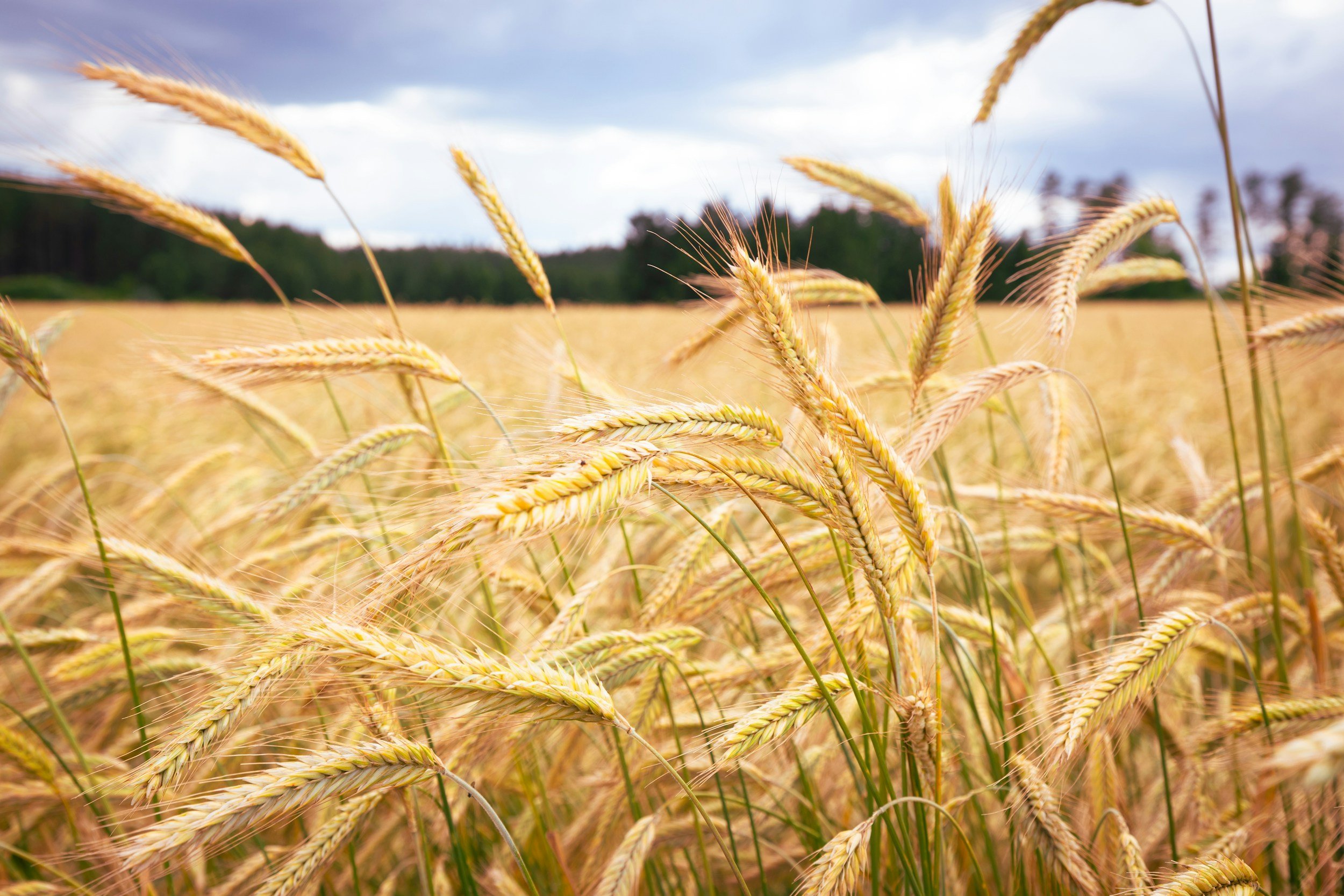
Can you imagine the Israelites saying: Aren't these my crops? Was I not the one who paid for the land and for the seeds? Didn't I spend my days tending to these fields, warding away pesky animals and insects until I could reap my harvest? Why should I have to give my hard-earned crops to the poor and the alien? Can't they grow their own food? Why should I even care about those people? They're not part of our tribe!
This sounds… oddly familiar.
And thus, God's command is twofold. Don't just leave the harvest at the edges of the field untouched, so that others may come, at the farthest distance from you, and take some food. Also leave the harvest that falls to the ground, and let those in need come and pick it up for themselves. Yes, let the poor and the foreigner walk through your fields and pick up enough for themselves.
Love as consequence
You shall not take vengeance or bear a grudge against any of your people, but you shall love your neighbor as yourself: I am the Lord. (Lev. 19:18)
When I was reading this passage, anticipating these familiar words, they surprisingly struck me as a bit odd. How can you command someone to feel a certain way toward another? Can love be cultivated on demand? (I don't think so… but I wish this was the case!)
When we put verse 18 in view of what comes before it, what we get, I think, isn't a command to conjure up some kind of emotion. Rather, as we've seen with the harvest, we are given instruction concerning our posture and action toward our neighbors. Love, here, signifies not only an emotion or attitude, but also a deed, an action.
One way to think of this is that love is not so much a command as it is a consequence. It is, as it were, the result of being rightly catechized by life together with the people of God. In other words, if we rightly follow God in the world today, we will always come to love our neighbors.
"And who is my neighbor?"
From here, Amar follows verse 18 into Luke 10 and the Good Samaritan. He reads the scholar's question, "And who is my neighbor?", as a test of where the boundary of neighbor love should fall. Listen to the full sermon to hear him walk through it.
Becoming a neighbor
What I want us to see in these two texts is a radically expansive vision of neighbor love that is cultivated in a process of becoming.
It is not simply a present statement of fact: I am a neighbor. It is a present progressive act of formation: I am becoming a neighbor to the one in need.
Jesus doesn't answer the scholar's question by delimiting the geographic or ideological boundary lines of who is "in" and who is "out," who is worthy of this love and who is not. Instead, he turns the question back on us: Who will you become a neighbor to?
Saints, I'm convinced that this is our task in the world today: to embrace this expansive vision of neighbor love in our communities, in our city, in our nation, in this world. To follow Jesus' command to "go and do likewise."
In a world that gives us every permission to hate, to hoard, to exclude, to build walls, to lie and slander, to excuse ourselves when the blood of our neighbor is at stake (Lev. 19:16), God calls us to love radically and unconditionally, with a kindness and goodness cultivated through the Spirit's work in us.
May it be so… here in our neighborhoods as it is in heaven.
Reflection
Amar says Chicago, and a student CTA pass, taught him how to become a neighbor. What place or person taught you?
Who are you still becoming a neighbor to?
Next Step
➤ Leave the gleanings. Choose one ordinary thing this week to leave within reach of a neighbor, and don't ask whether they earned it.
➤ Read Becoming Neighbors.
